





€0.00
Physics
Learning Quantum Computing by Building one
I am trying to learn about quantum computing and hopefully be able to build one
I am fascinating by quantum computers and I actually want to be able to build one, despite it's "impossible" for a single person.
In this post I intend to log my learnings and while I start building I keep updating my knowledge here.
Most of us know what a computer is and how it's processor work to calculate with 1's and 0's.
A processor is made up of transistors that switch between these 1's and 0's.
In a quantum computer these transistors are replaced with qbits, these are essentially atoms or ions and work similar to 1's and 0's with one BIG difference.
When not measured the state of a qbit is somewhere between 1 and 0 with all the differences between it.
A quantum computer works similar with 1's and 0's with one big difference.
A conventional processor can only have two states, either 1 or 0.
What components does a qunatum computers exists of?
I am trying to build a quantum computer and I want to know what components it exists of.
A quick Google (AI) search provided me with this list:
Core Quantum Components
-
Qubits (Quantum Bits): The fundamental unit, capable of being 0, 1, or both (superposition). Common types include superconducting circuits, trapped ions, photons, and spin qubits.
-
Qunatum Gates & Circuits: Operations (gates) applied to qubits, combined into circuits to perform calculations.
-
Qunatum Processor (QPU) The chip containing the physical qubits and their interconnects, acting as the quantum "brain".
-
Quantum Memory: Stores qubits, preserving their delicate quantum states.
Control & Support Systems
-
Control System: Classical electronics generating precise microwave pulses, lasers, or voltages to control qubit operations in real-time.
-
Classical Computer Interface: Standard computers manage the overall process, sending instructions and reading out results from the QPU.
-
Cryogenic/Environmental Systems: Many systems (like superconducting ones) require ultra-low temperatures (near absolute zero) or vacuum to shield qubits from environmental noise, preventing decoherence.
-
Quantum Error Correction: Hardware and software to encode logical qubits across multiple physical qubits, detecting and fixing errors inherent to quantum systems.
I do have a general knowledge of science and computers since I started programming at 12 years of age and worked profesionally with electronics recycling for the last 10 years, but his doesn't seem that close to my house for me.
So let's start with the very basic component of a quantum computer, mainly the Qubit.
What is a Qubit exactly?
The definition of a Qubit is the basic unit of quntum information.
What this tells me is that a Qubit stores the information that is generated or computed by this unit. Now I know that some qunatum computers are made with atoms but this doesn't has to be the case. It can be made with different units that all have their own fields of study.
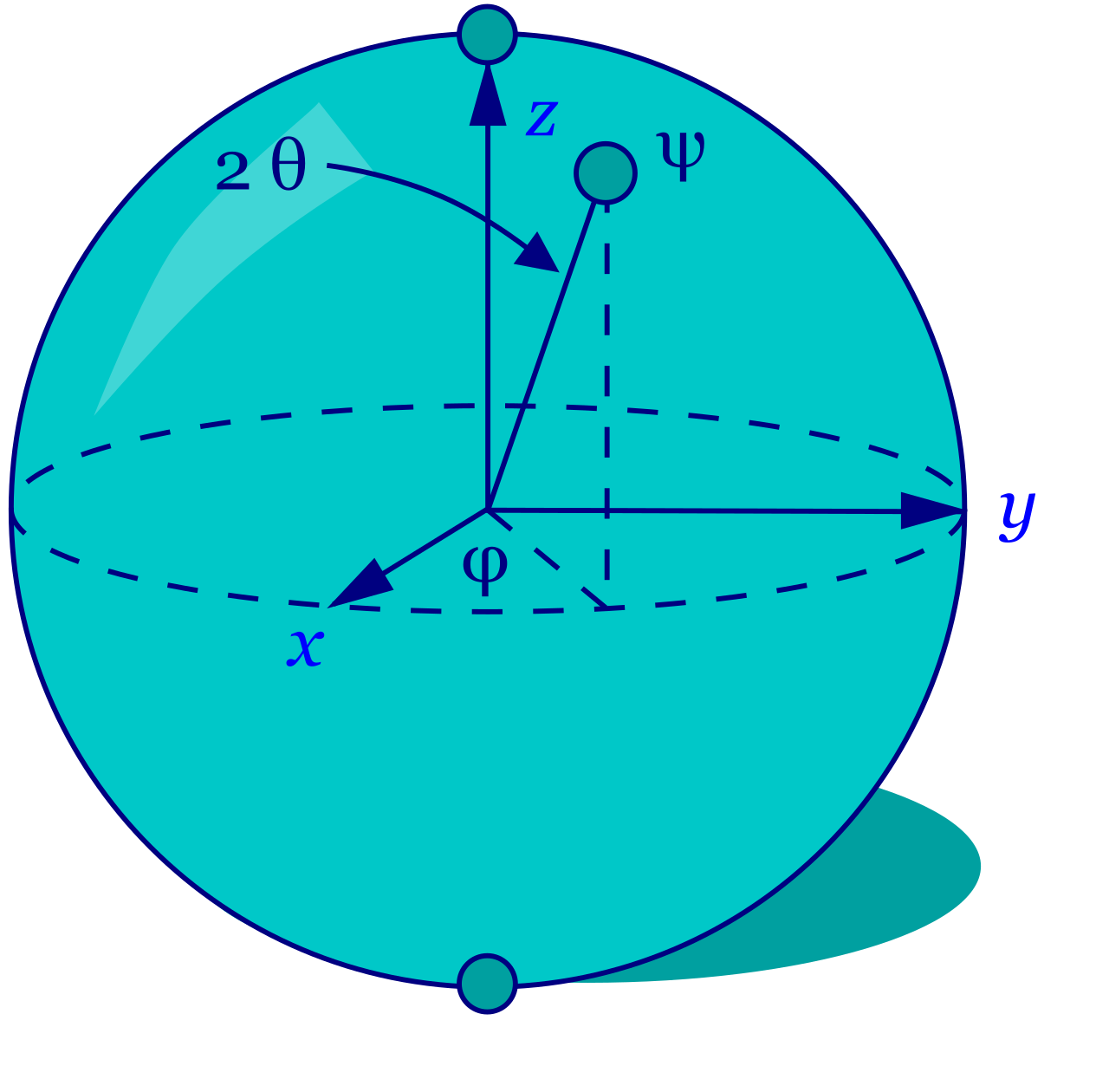
So which Qubits are there and what do we chose?
This is a quick list I pulled of a search:
-
Superconducting Qubits:
-
How they work: Tiny electrical circuits with Josephson junctions, controlled by microwave pulses.
-
Pros: Highly scalable, fast gate operations, mature technology (used by IBM, Google).
-
Examples: Transmons, Flux Qubits, Charge Qubits.
-
-
Trapped Ion Qubits:
-
How they work: Individual charged atoms (ions) held by electromagnetic fields, manipulated with lasers.
-
Pros: Very high fidelity (accuracy), long coherence times (used by IonQ).
-
-
Photonic Qubits:
-
How they work: Using properties of single photons (particles of light).
-
Pros: Operate at room temperature, good for communication, minimal loss over distance (used by Xanadu).
-
-
Neutral Atom Qubits:
-
How they work: Cold, neutral atoms trapped in optical tweezers or lattices, controlled by lasers (e.g., Rubidium, Cesium).
-
Pros: Long coherence, scalable, good for simulation.
-
-
Quantum Dot Qubits (Spin Qubits):
-
How they work: Electron spins in semiconductor nanocrystals (dots), controlled by electrical gates and magnetic fields.
-
Pros: Potential for high integration with existing semiconductor tech.
-
-
Nitrogen-Vacancy (NV) Centers:
-
How they work: Defects in diamond crystal lattices.
-
Pros: Operate at room temperature, long coherence.
-
-
Topological Qubits:
-
How they work: Based on exotic quasiparticles (anyons) in 2D materials, aiming for inherent error protection.
-
Pros: Highly robust against noise (still largely theoretical/developmental).
-
-
Nuclear Magnetic Resonance (NMR) Qubits:
-
How they work: Nuclear spins in molecules in a liquid, controlled with radio waves (early approach, less common now).
-
Great, there is also a pros included in the list.
All these look fairly difficult to me and I know the basics of a Qubit but to actually build one is a different story.
My initial thought is to figure out the basics of all the Qubits and then pick the simplest to build. So we need to have the pros and cons from a very practical standpoint.
Superconducting Qubit:
A superconducting Qubit is an artificial atom
Cons:
-
Needs a dilution refrigurator
Trapped ions:
Pros:
-
A big advantage of traps ions is that it doesnt need a dilution refrigurator
Photonic Qubits:
Pros:
-
Its achievable on room temperature without
© Data Impact. All rights reserved.


